When looking around at his community, Pastor John Dixon of Crest Community Church in Riverside, Calif., saw two distinct needs: affordable housing for people in transition and healthy relationships for those society considers “the last, the least, and the lost.”
“We are in a moment culturally of rapidly declining social trust,” says Pastor John, “and what the moment requires of the Church is for a network of weavers who will mend the social fabric.”
Alongside the needs, he also saw an opportunity wrapped up in two unused acres of Crest’s property.
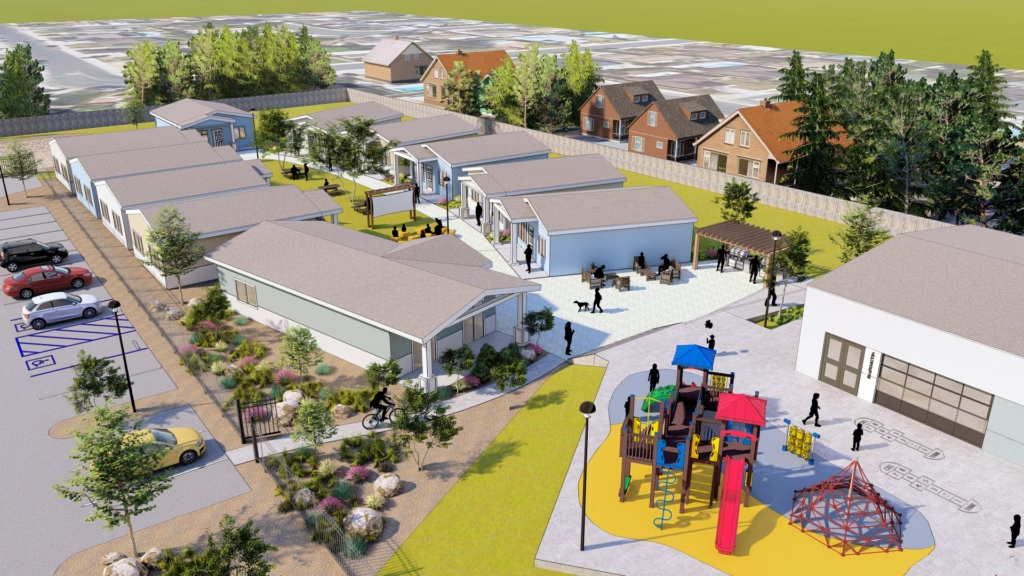
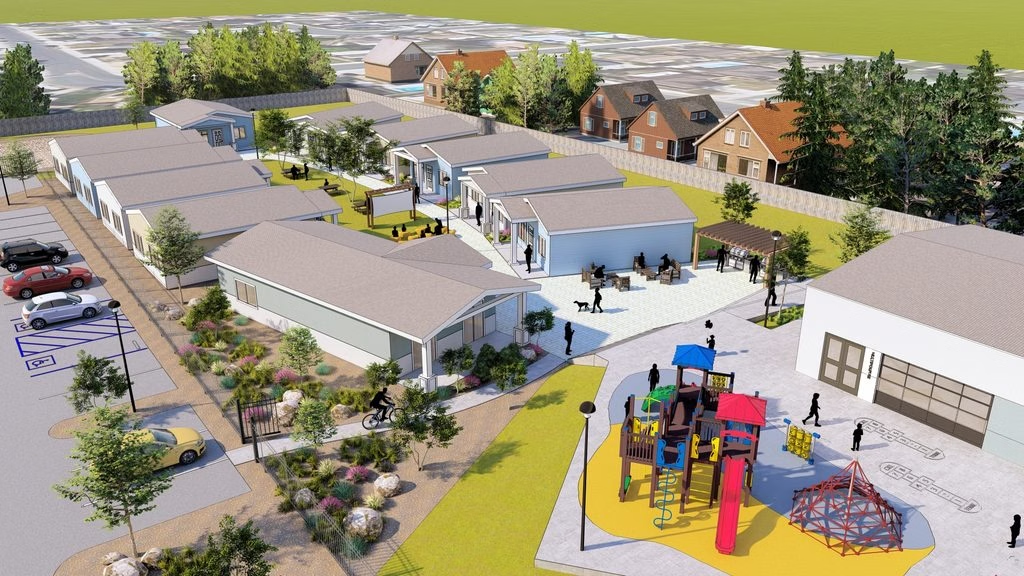
After 10 years of praying, dreaming, and exploring, the congregation broke ground in January 2026 for Crest Cottages, a community of tiny homes to support foster youth and young adults as they step into adulthood.
Transcript
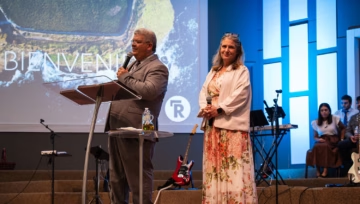
My name is John Dixon, and I’m the lead pastor of Crest Community Church, located in Riverside, California.
Crest, for a long time, has been a church of deep compassion for who society considers the last, the least, and the lost. Our property’s about three acres, and almost two of those acres are unused. So for as long as I’ve been here, we’ve been praying, “How do we use that unused property for the Kingdom of God?”
There is a very serious housing crisis where we live, but we also know that deeper than just the housing crisis, there is a crisis of community. The vision that we had in prayer is what if we addressed the housing crisis in our city, but also addressed the underlying crisis, which is this severe poverty of relationships? And if we can include people on our property, provide housing, but also come around them in the way that the church was meant to, which is to love our neighbor as ourself, maybe we could solve both.
This vision we call Crest Cottages.
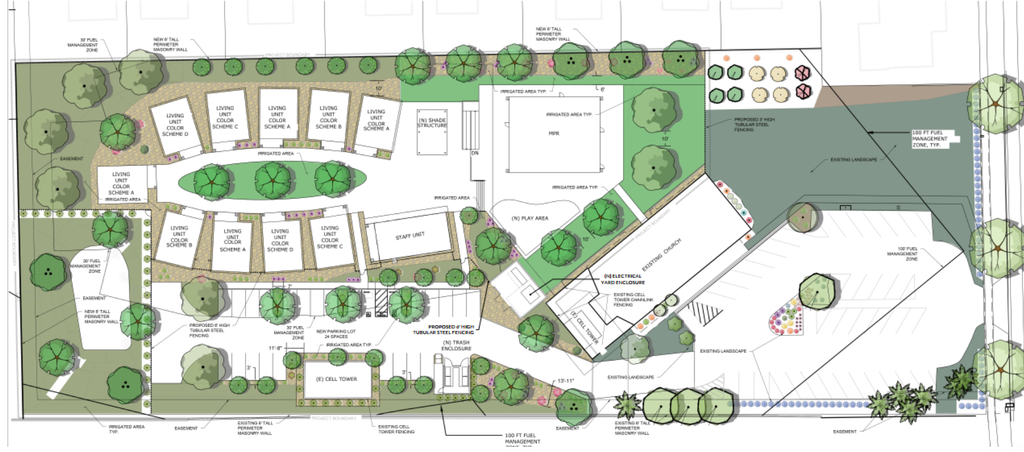
We take this rough draft vision for Crest Cottages to city hall. The mayor at the time sends his chief of staff and an officer of building and development to meet with us. And there’s just three of us from the church that come, kind of sheepishly and pass forward our rough draft. Our prayer leading into this was, “God, we pray that we don’t get laughed out of the building.”
To our surprise and delight, the mayor’s chief of staff and officer of building development looked at each other with excitement in their eyes and turned back to us and said, “This is exactly what the city needs.”
The seeds of the vision were about 10 years ago, and ever since then, it has just been a long obedience in the same direction. We started quickly realizing that the scale of this project could be much larger than we could handle.
Anytime you build anything in California, it’s a challenge. This is not my world as a small church pastor. I’m not a construction person. I’m certainly not a person who can navigate the politics of the city.
There are so many requirements in new construction in this area, particularly being a high fire risk zone next to the local foothills, that the landscaping is so specific. You can choose from a list of trees that are approved by the fire marshal, and if the tree that you want to plant isn’t on that very narrow list, there is a leaf foliage calculator that will tell you if there are too many leaves on this tree.
That’s the level of minutia that you have to consider when adding a tree to the landscape plan. And so again, local church pastor, I’m pretending to put on this contractor hat, and it just doesn’t fit.
About three years ago, the former mayor connected me with Olive Crest, which is a local nonprofit that just brilliantly works in the child abuse prevention space, but particularly with foster care and adoption. We began to just share vision.
Olive Crest goes, “You’re not going to believe this. We are hoping to do almost the same exact thing that you’re hoping to do among the same populations that your heart has been moved by. We don’t have the land to do that. We’re looking for the land, but we already have that program, and we run it brilliantly all over.”
It felt like a God moment because we thought, okay, so we have the land and the heart as the church to love our neighbor as ourself. You have the capacity to fundraise and to run it with expertise. Maybe this could be one of those Kingdom symbiotic relationships where we come together for the good of the city.
We have decided to lease our land for a dollar a year for up to 50 years, and they, in turn, fund the project and run the program. Now it’s rolling. And in theory, nine months from now, we’ll be welcoming our first residents of Crest Cottages.
We are in a moment culturally of rapidly declining social trust, and what the moment requires of the Church is for a network of weavers who will mend the social fabric. People of peace who will build bridges, people of hospitality who will reach towards disparate groups and say, “We’re going to build something beautiful together, and our eyes are fixed on the kingdom of God for that inspiration.” We’re actually going to step into rough places with the love of Jesus and proclaim a different way, then we want to be part of that story.
Whether it takes six months or ten years or 20, begin to say, “All right, what does it look like for us to give this to you, Lord, that you might receive glory?”