BIC U.S.’s Directed Study Program (DSP) allows someone who’s interested in learning about God or theology to learn at their own pace. Courses vary in terms of content and cover topics like biblical study, Old Testament, New Testament, spiritual formation, and Brethren in Christ theology. Classes are offered each year during three 14-week terms: fall, spring, and summer.
Registration is now open for the Summer 2026 term, starting on May 4.
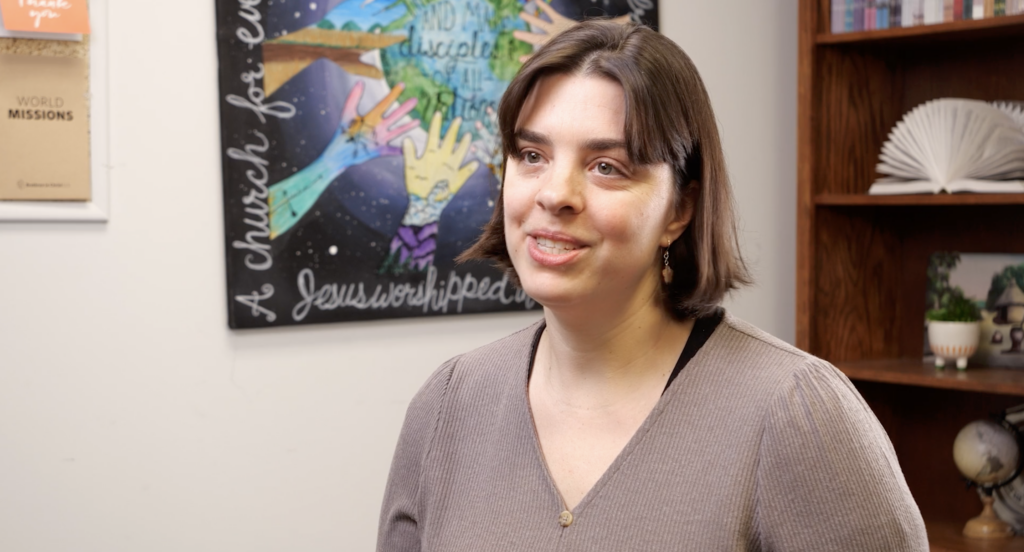
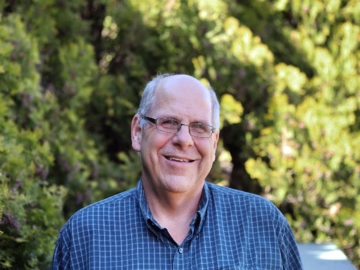
In this video three pastors – Jeff Piepho of Revolution Church; Naomi Smith of Dillsburg BIC, a DSP graduate; and Joshua Nolt of Lancaster BIC, a DSP facilitator – share their experiences with and love for the DSP course.
Video Transcript
Jeff Piepho: The DSP is the Directed Study Program, and it allows someone who’s interested in learning about God or theology to learn at their own pace.
Naomi Smith: It’s for people who have not completed a seminary education, but who have interest. They’re experiencing a call to ministry or would like more preparation in their ministry journey.
Joshua Nolt: Courses vary in terms of content, so you can have biblical study courses, Old Testament, New Testament kinds of courses. You have formation courses. There’s a spiritual formation course that, uh, develops your life with God and spiritual practices. There are courses centered around Brethren in Christ’s theology. There’s a course on John Wesley and things that influence the Brethren in Christ and how we think
NS: When you enroll in the course, you’ll receive a syllabus. From that point. It really is very self-directed, so you have a facilitator who’s helping you, you know, provide that structure and timelines for submission of materials. You have other classmates that you can connect with in a virtual online format, but you move through the course at your own pace.
JP: DSP facilitators also give feedback, so it’s not just, “Hey, we’re gonna assign you some readings and then bye, you’re on your own.” It’s interaction, sometimes with the class, sometimes with the facilitator, but students are getting feedback on what they’re learning and knowing if they’re on track or not, which is much better than just taking an online digital course by itself. It’s called directed study, meaning it’s directed, you’re not completely on your own.
JN: There are former seminary deans, uh, who are a part of the DSP program. There are people with their doctorates in the DSP program and they’re heavily invested in the Brethren in Christ Church. It’s very much a Brethren in Christ slant, a Brethren in Christ informed perspective that comes into these courses.
JP: I mean, there’s not very many colleges or online classes where you can say, “Hmm, I’d like to learn about salvation and baptism from an Anabaptist Wesleyan perspective.” Like, that’s just not out there.
But you go to the DSP and you’re gonna learn eschatology, you’re gonna learn ecclesiology, you’re gonna learn baptism theology, you’re gonna learn Christology all from the Anabaptist Wesleyan Pietistic Evangelical perspective.
NS: One of my favorite courses that I took was Intentional Discipleship, and in my role now as essentially a pastor of discipleship, it’s super helpful to return to some of those ideas.
Even a class like basic Christian doctrine. You know, I do a lot of work with small children, and you might think like, well, how important is theology when you’re teaching little kids? And honestly, I feel like the younger the audience, maybe the more important it is to be really firm on what is the Christian doctrine of the church so we can be speaking truth to people of all ages.
JP: I’m so excited by the DSP that I get people at my church to take it on a regular basis. Right now, my youth director’s doing DSP classes. I’ve got my, um, worship director interested in it. I have multiple people who aren’t even going into ministry professionally taking DSP classes.
One of the best things about the DSP is that you get high level information delivered in a way that someone who has a full-time job and a family can still take the class and learn from it.
JN: I’ve had several people who have now taken pastoral roles that started out in the DSP program. My associate pastor received her ordination through the DSP program. One of our bishops went through the DSP program. And so it’s a really accessible way for laypeople in the church or people who are interested in pursuing ministry and a calling to vocational ministry to get the education, the knowledge, the formation to equip them for those roles.